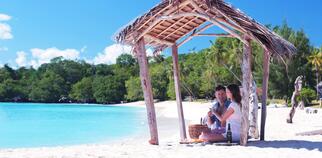
Tahiti is often synonymous with overwater bungalows and indulgent, resort-style escapes. But beyond the turquoise lagoons lies something far more profound – a living, breathing culture shaped by centuries of tradition.
At the heart of this is the Ma’ohi civilisation, an ancestral culture that has flourished across French Polynesia for more than a thousand years. Its origins trace back to the island of Raiatea, from where early seafarers embarked on extraordinary voyages across the Pacific, settling island after island over generations.
Reaching as far as New Zealand, Hawaii and Easter Island, the Ma’ohi created what is known today as the Polynesian Triangle. Along the way, they carried with them language, customs and beliefs – many of which continue to thrive in Tahiti today. For travellers seeking more than sun and sand, this cultural depth offers a compelling reason to look closer.
Ancient navigation traditions
Long before modern navigation tools existed, Polynesian voyagers were mastering the open ocean.
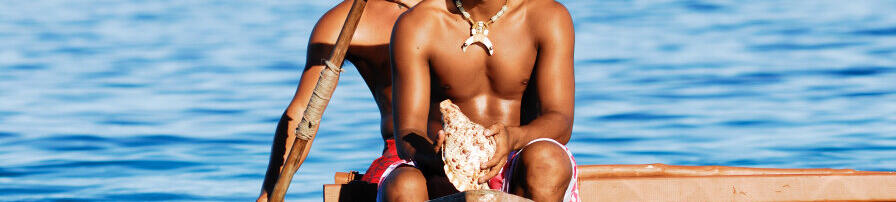
Travelling vast distances in outrigger and double-hulled canoes, they relied entirely on their knowledge of the natural world. Without compasses or instruments, navigation was guided by the rising and setting of the sun, the stars, ocean swells, wind patterns and even the behaviour of birds.
It was a discipline built on observation, memory and intuition – and it was remarkably precise. So respected were these skills that Captain James Cook enlisted a Polynesian navigator during his first Pacific voyage.
Today, this remarkable heritage lives on. Visitors can experience traditional wayfinding first-hand by joining a sailing canoe expedition – a rare opportunity to connect with one of the world’s oldest navigational practices.
Birthplace of body art
Today, tattooing is a common practice across the world, used by people of all cultures as a form of self-expression. But in Polynesian culture, it carries far deeper meaning.
Tahiti is the birthplace of the tattoo – the word derives from the Tahitian word tatau – and traditionally tattoos were a powerful form of identity, communicating lineage, social status and personal achievements through intricate, symbolic designs.
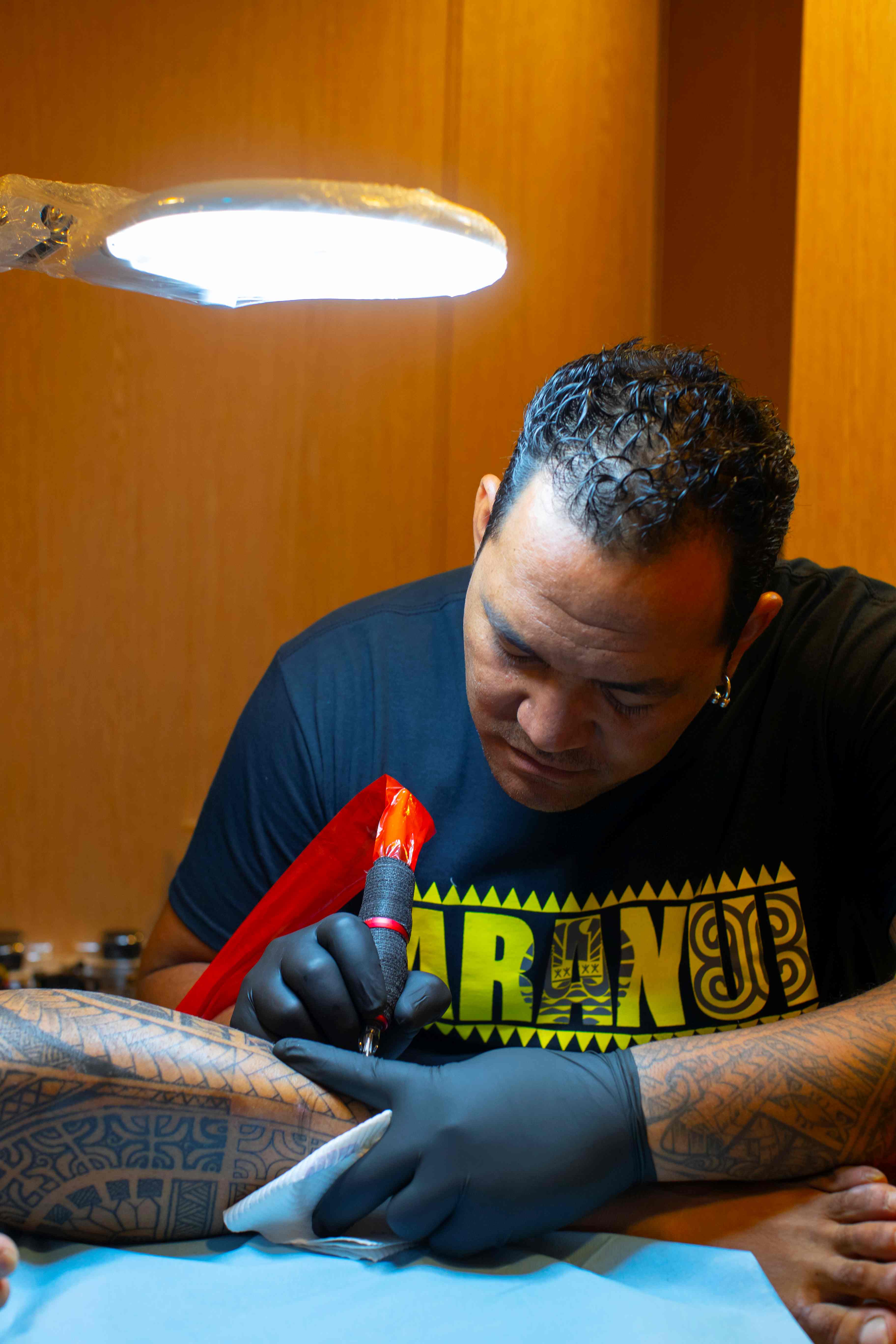
They also marked important life stages, from adolescence to marriage, and held deep spiritual significance. Tattoos were believed to be gifts from the gods, imbued with protective power and connected to mana – the sacred life force present in all things.
The traditional method of tattooing was extremely painful – sharpened bone needles were struck repeatedly to embed natural pigments into the skin – and the endurance required made them a visible symbol of strength, courage and status.
A cuisine shaped by land and sea
Food in French Polynesia is a direct reflection of its environment – abundant, fresh and deeply rooted in tradition.
Coconut is central to many dishes, while seafood – from tuna to mahi-mahi and lagoon fish – features prominently, often prepared in ways that highlight its natural flavour. Staples such as taro, breadfruit, chicken and roast pork round out the local diet.
The most iconic dish is poisson cru – raw tuna marinated in lime juice and coconut milk – a simple yet vibrant expression of island cuisine. For something sweeter, firi firi – a coconut milk doughnut – is a breakfast favourite.
Each archipelago brings its own specialities, from breadfruit-based dishes in the Marquesas to taro preparations in the Austral Islands and traditional breads in the Tuamotus. Today, a new generation of chefs is reimagining these classics, incorporating local ingredients like Tahitian vanilla into contemporary creations.
The gem of the South Pacific
Few natural treasures are as closely associated with Tahiti as the Tahitian pearl. Formed in the black lip oyster, these pearls are renowned for their dark, iridescent tones – ranging from charcoal grey to deep green.
True black pearls are exceptionally rare and considered one of the most beautiful kinds of pearls in the world. Because the black lip oyster is quite large, a Tahitian pearl can often grow to a bigger-than-average size.
In ancient times the Tahitian pearl was regarded as a symbol of purity and virtue and highly sought-after in the Middle East and Asia. The first cultured black pearl was created in a lagoon on Bora Bora in 1961 using grafting techniques originating in Japan. The result of this first experiment was so successful the technique was extended to a series of islands in the Tuamotu archipelago located to the northeast of Tahiti.
Today, the Tahitian pearl is French Polynesia’s largest export. Elegant and distinctive, the pearls are more than a souvenir – they’re a lasting connection to the islands.
Heiva – a celebration of life
For a truly immersive cultural experience, time your visit with Heiva i Tahiti – the region’s most important annual festival.
Held each July in Papeete, Heiva is a vibrant celebration of traditional dance, music and sport. Its origins date back to 1881, when Polynesian performances were incorporated into Bastille Day festivities. Over time, the event evolved into a powerful expression of cultural identity, officially becoming Heiva i Tahiti – meaning “celebration of life” – in 1985.
Today, it stands as a proud showcase of heritage and resilience.
The highlight is a major competition between dance troupes from every corner of French Polynesia, performing Tahitian dances. For Tahiti’s youth, preparing for Heiva is a rite of passage – performers train for months before the event and create intricate costumes using local materials like coconut fibres, shells and leaves.
Traditional sports also take centre stage, with hundreds of Polynesians showcasing their strength and skill in stone lifting, javelin throwing and outrigger canoe racing.
Heiva is more than just entertainment – it’s a living expression of Polynesian history, identity and pride.
Beyond its picture-perfect beauty, Tahiti offers something far richer – a chance to connect with a culture that has stood the test of time. To experience it for yourself, reach out to the Spacifica Travel team on 1800 800 722 to create a tailored itinerary.
Share via
Other blog articles you may enjoy…

Plan Your Norfolk Island Golf Holiday
The Best All-Inclusive Resorts in the Cook Islands
The story behind the Norfolk Blue