Wataweih – Hello in a Language Spoken Almost Nowhere Else on Earth
The Norf’k Laengwij is a creole language, spoken by the descendants of the infamous mutineers of the HMS Bounty and their Tahitian companions. The two groups merged as the mutineers hid out on Pitcairn Island during the late 18th and early 19th centuries, and this unique language became their form of communication.
When the Pitcairners were gifted Norfolk Island by the Queen and relocated in 1856, they brought the language with them, cementing it as a cultural cornerstone of Norfolk Island’s history. Today the Norf’k Laengwij is recognised by UNESCO as endangered, with only 400 – 800 speakers worldwide. Still, it is taught in school and spoken in the wider community, ensuring this cultural icon does not fade into obscurity.
Where Did Norf’k Come From?
The Bounty Connection
The Norf’k language can be directly traced back to the mutineers of the HMS Bounty. If you’re familiar with the rich history of Norfolk Island, you will be aware that in 1789 some of the crew, led by acting-Lieutenant Fletcher Christian, took control of the vessel from Captain William Bligh. The crew had spent five months on Tahiti and were reluctant to return to the strict discipline of the royal navy service, spending only three weeks at sea before deciding to take matters into their own hands. After the mutiny some of the insurgents headed back to Tahiti, while the others stopped to pick up their new Tahitian associates before sailing on to the remote shores of Pitcairn Island.
When the group arrived on Pitcairn they realised they required a way to communicate across the two different groups. What emerged was a creole dialect that drew from English and Tahitian, shaped by the isolation of Pitcairn. 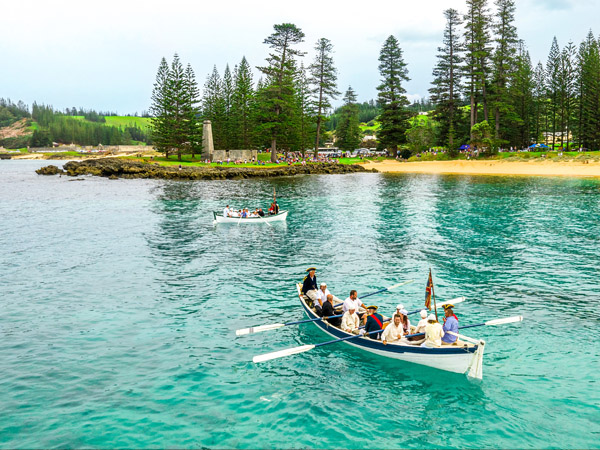
The Move to Norfolk Island
The population of Pitcairn swelled to 193 and was rapidly outgrowing the limited food supply and resources the island could offer. The British government and Queen Victoria then gifted the Pitcairners Norfolk Island, and they relocated to their new home in the South Pacific in 1856.
Many cherished relics from the Bounty were brought with them to Norfolk, alongside their plentiful stories, unique culture, and new language. That language has survived on Norfolk Island for the nearly 170 years since their arrival.
What Norf’k Sounds Like
To an English speaker, the Norf’k Laengwij is just recognisable enough to feel tantalisingly close to be understood. There are elements of old English nautical vocabulary sitting alongside Tahitian sounds and structures, and a lilting tone reminiscent of West Country English mixed with long vowels and laid-back island rhythms. Why not try some pronunciations for yourself?
Watawieh? – Hello / How are you?
Kushu – Good / All right.
Fut yuu nor kaem? – Why didn't you come?
Whatawieh yuu? – How are you doing?
See yuu morla – See you tomorrow.
Yorlye come lookorn – You all come and see.
Mee aefi go – I have to go.
Waes dees ya? – What is this?
Ai lawa yuu – I love you.
Bootiful – Beautiful.
The Language Class Experience
The Norf’k Laengwij class is offered to visitors as part of the island’s cultural programme, with sessions covering the history of the language, basic vocabulary and pronunciation. The instruction is friendly and accessible, and participants don’t require any prior experience in studying language – just a willingness to try, and a good sense of humour!
Many guests comment that having the ability to take even the most basic of phrases learnt in the class and use them in their introductions with locals has added a genuine warmth and connection to the rest of their stay.
Why This Experience Is Unique
There is nowhere else in the world where Norf'k is spoken as a living community language, making this one of Norfolk Island's most remarkable cultural experiences. Born from the extraordinary journey of the Bounty mutineers and the Pitcairn Islanders who later made Norfolk their home, the language remains a thread that connects generations to their ancestors.
The language crafted and cultivated on Pitcairn Island is a tether that holds the ancestors close in modern life. When visitors take part in the Norf’k Laengwij class they go beyond learning new words - they step into a story shaped by mutiny, settlement and relocation, discovering a language that continues to be spoken and shared every day.
To book your spot in a Norf’k Laengwij Class as part of your holiday package, contact our team of island experts on 1800 800 722 or view our current range of deals
Share via
Other blog articles you may enjoy…

Plan Your Norfolk Island Golf Holiday
A slower South Pacific: why Vanuatu works for couples who want to disconnect

Beyond Bora Bora